

From Waste to Worth in a Regenerative World
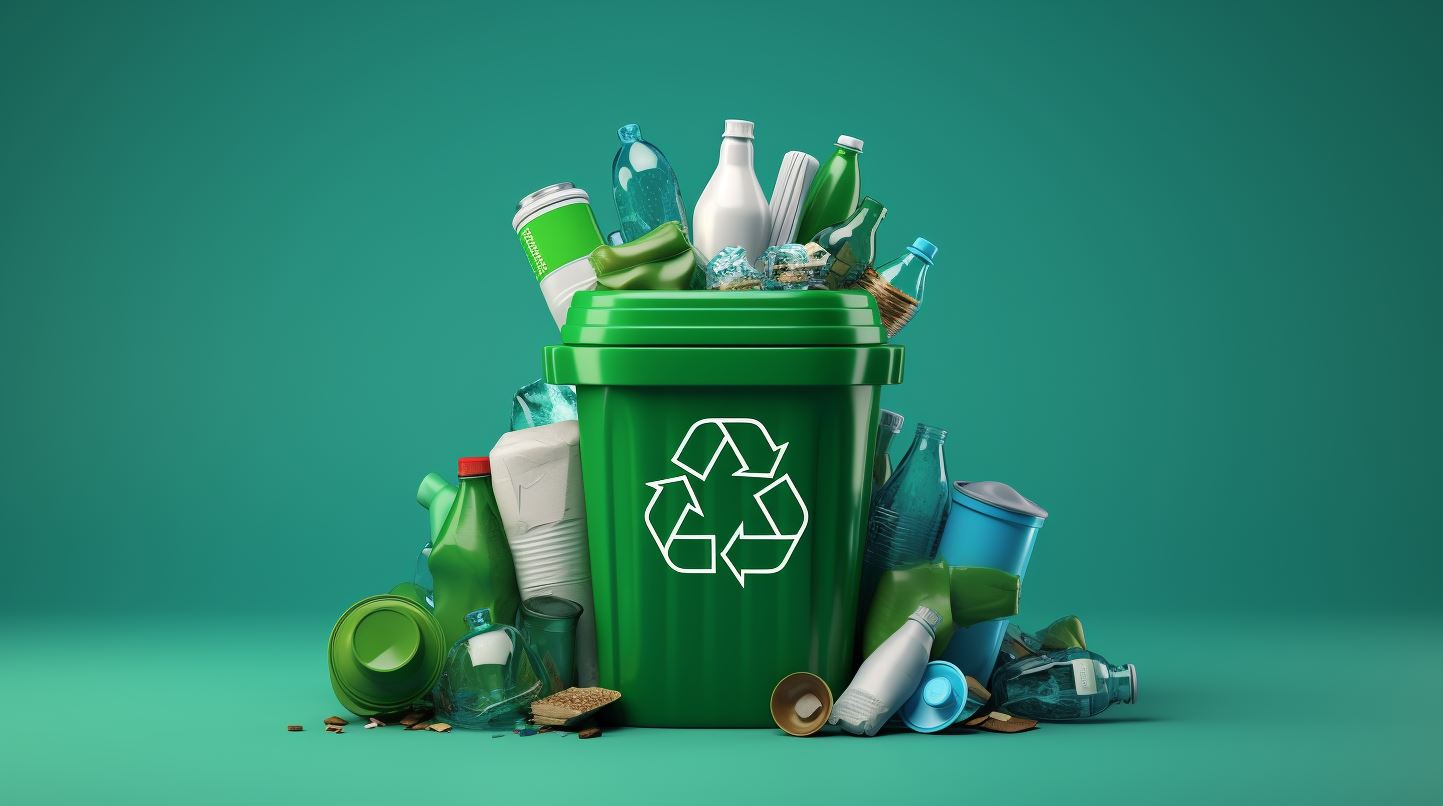
The New Understanding of Waste Is Reshaping Cities, Economies, and the Moral Weight of Consumption
The Shadow of What We Throw Away
Every discarded wrapper, every forgotten bottle, and every pile of industrial debris tells the story of a civilization that has yet to learn the meaning of completion. Waste is not only a byproduct of progress but a mirror of our habits, values, and negligence. For centuries, societies have treated disposal as disappearance, burying the evidence of consumption in distant landfills or foreign shores. Yet, the modern world has reached a point where there is no “away” left. The oceans carry plastic continents, cities breathe in the ash of their own excess, and ecosystems collapse under mountains of refuse. Responsible waste management begins not with machinery or policy but with an awakening. It demands that we see waste not as something to remove but as something to understand. It is a reflection of imbalance, an equation that has remained unsolved because it requires not more technology but more humility.
The Anatomy of an Overlooked Crisis
The global waste crisis is woven into the very structure of our economy. The linear model of “take, make, and dispose” functions like a short-sighted loop that ignores the future cost of its own convenience. Each year, the world generates billions of tons of solid waste, and a significant portion of it is mismanaged, burned in open air, or dumped into rivers and oceans. Plastics, metals, and electronic scraps travel farther than human migrations, spreading microscopic pollutants across food chains and bloodstreams. Landfills release methane, a greenhouse gas many times more potent than carbon dioxide, while incineration plants release toxic particulates that burden public health. The crisis is not confined to developing nations; it is global, systemic, and deeply embedded in modern lifestyles. To address it requires dismantling the illusion of infinite consumption, redefining progress as permanence, and recognizing that sustainability is not an option but an obligation to continuity itself.
The Birth of Circular Thinking
In response to decades of environmental degradation, a new philosophy has begun to guide industries and governments alike: the circular economy. Unlike the linear model, it views materials as participants in a perpetual cycle rather than disposable entities. Products are designed for disassembly, packaging becomes compostable, and waste is treated as a raw material waiting to be reborn. Cities are beginning to adopt circular infrastructure that integrates recycling plants, composting centers, and digital tracking systems to ensure accountability at every stage. Companies are reimagining supply chains through closed-loop systems where nothing leaves without returning. Even consumers, armed with new awareness, are participating in repair, reuse, and sharing networks that challenge the culture of replacement. The circular economy transforms responsibility from a burden into a form of creativity. It teaches that waste is not an endpoint but a beginning, a point of transformation where innovation and ethics converge.
Technology and the New Alchemy of Waste
Modern technology has turned what once seemed unmanageable into an opportunity for reinvention. Advanced sorting systems powered by artificial intelligence can now identify and separate recyclable materials with remarkable precision. Organic waste is being transformed into biofuels through anaerobic digestion, while industrial residues are being repurposed into building materials, fertilizers, and even textiles. E-waste recycling facilities recover rare metals essential for electronics, reducing dependence on mining and the ecological damage it causes. Waste-to-energy plants convert non-recyclable materials into electricity and heat, providing cities with renewable power while reducing landfill loads. However, technology alone cannot solve the problem. It must be guided by ethical frameworks and policies that prevent rebound effects, where increased efficiency leads to increased waste production. True innovation in waste management lies in the marriage of technology and restraint, where progress is measured not by how much we can discard but by how little we need to.
The Human Role in the Chain of Responsibility
Machines may process waste, but humans create it. Individual choices accumulate into collective consequences, shaping the landscapes of pollution and preservation alike. A person’s decision to buy, reuse, or discard has ripples that extend across supply chains and ecosystems. Education is therefore one of the most powerful tools in waste management. Communities that understand how consumption affects their environment are more likely to adopt sustainable behaviors. Schools are incorporating lessons on recycling and environmental ethics into curricula, while urban programs teach residents how to separate organic and inorganic waste effectively. Businesses encourage responsible consumption through incentive-based recycling programs and transparent labeling. Even social media campaigns play a role, transforming awareness into movement. Responsibility, in this context, transcends law and policy; it becomes a culture of mindfulness, where waste is no longer invisible but a shared moral and environmental reality.
The Role of Policy and Global Governance
Legislation has long been the backbone of environmental reform, and responsible waste management is no exception. Governments across the world are implementing extended producer responsibility laws, which hold manufacturers accountable for the end-of-life management of their products. Single-use plastics are being phased out, and zero-waste strategies are being integrated into national development plans. The European Union has pioneered directives that promote circularity, while cities like San Francisco and Stockholm have achieved recycling rates exceeding seventy percent. International cooperation is equally vital. Agreements such as the Basel Convention regulate the movement of hazardous waste across borders, preventing exploitation of developing nations as dumping grounds. Still, enforcement remains inconsistent, and corruption often undermines progress. The effectiveness of policy depends on its ability to connect with people’s sense of duty rather than compliance alone. Governance becomes sustainable only when it aligns economic growth with ecological integrity, transforming regulation into renewal.
The Future of Urban Waste Ecosystems
The cities of tomorrow will not treat waste as a problem but as a resource woven into their design. Smart urban planning is introducing sensor-based collection systems that optimize routes, reduce fuel consumption, and prevent overflow. Underground pneumatic pipelines transport waste directly to treatment facilities, eliminating the need for traditional garbage trucks. Buildings are equipped with modular recycling units, while rooftop composters return nutrients to urban gardens. Some cities are experimenting with blockchain-based tracking systems that verify the origin, destination, and treatment of every waste stream. This transparency builds trust and accountability among citizens, companies, and governments alike. Meanwhile, architects and engineers are developing “zero-waste districts” where materials are continuously recycled within localized loops. The urban landscape becomes an ecosystem, where waste is metabolized and transformed. The future of cities depends not on how efficiently they remove waste but on how beautifully they reuse it.
The Ethics of Discard and Renewal
Beyond policy, science, and design, responsible waste management carries a profound ethical dimension. It challenges the consumer to confront the hidden cost of convenience and the illusion of disposability. To waste is to forget, and to manage waste responsibly is to remember our connection to the materials that shape our lives. It requires empathy toward future generations who will inherit the consequences of present neglect. Faith-based organizations, indigenous communities, and environmental activists remind us that stewardship is not merely an economic strategy but a moral calling. Waste management thus becomes a form of reconciliation between humanity and the Earth. It symbolizes the maturity of a civilization that no longer defines progress by accumulation but by restoration. Every act of recycling, composting, or repurposing becomes a small ritual of respect, a quiet affirmation that existence itself is a cycle, and that even what we discard deserves dignity.
The Path Toward Regenerative Living
Responsible waste management is not a single policy, machine, or movement, it is a transformation of consciousness. It asks individuals, companies, and governments to operate within the rhythms of regeneration rather than extraction. The world of GreenEconomy envisions a planet where materials circulate endlessly, where energy fuels renewal instead of decay, and where every product carries a purpose beyond its use. In that vision, the landfill disappears, replaced by a landscape of creativity, responsibility, and harmony. When humanity learns to complete its cycles, to close its loops, and to give back as much as it takes, then the concept of waste itself dissolves. What remains is not garbage but gratitude, not residue but renewal. The quiet revolution beneath our trash becomes a story of rebirth, where progress and preservation finally speak the same language.