

Clouds of Change Rising from the Ground
Emerging Innovations Are Clearing the Air and Rebuilding the Planet’s Breath
The Invisible Burden We Carry
Every city skyline tells a story of ambition written in glass and steel, yet beneath its glow lies an atmosphere burdened by invisible scars. For decades, progress came at the cost of purity, a compromise made in the name of growth. From the smoke of factories to the quiet seepage of chemicals into rivers, the evidence of excess surrounded humanity without always being seen. Today that silence has broken. Awareness has turned into urgency, and urgency into innovation. Pollution reduction technologies are no longer the domain of distant research papers; they shape the air we breathe, the water we drink, and the soil beneath our feet. Scientists, entrepreneurs, and communities have realized that cleanup is not a single act but a continuous collaboration between nature and human intelligence. The invisible burden can be lifted only through persistence, creativity, and humility. Each advancement becomes a small act of atonement, restoring balance one molecule at a time, reminding us that progress must now be measured not by how much we create but by how cleanly we can sustain what already exists.
Breathing Cities Back to Life
Urban landscapes are ground zero for innovation because their air tells the clearest truth about pollution. The dense fogs that once symbolized prosperity now signify urgency. Architects and engineers are reinventing cities as living organisms capable of self-purification. Towering air purifiers such as those tested in Beijing and Rotterdam use ionization to capture microparticles, returning oxygen that feels almost newly born. Bus stops lined with green walls absorb both noise and carbon, transforming waiting areas into pockets of fresh air. Roads made of photocatalytic materials dissolve nitrogen oxides when sunlight strikes their surface, silently scrubbing the atmosphere during every daylight hour. These interventions do more than cleanse; they teach citizens that the environment is not passive. When urban design integrates purification, awareness follows. Communities begin planting rooftop forests and vertical gardens, realizing that even small patches of green hold the power to reshape entire neighborhoods. The future of clean cities will depend not only on policies but on imagination, because every lamppost, pavement, and façade can become an ally in the pursuit of breathable air.
Water That Learns to Heal Itself
Water pollution represents a challenge as complex as life itself because it flows through every corner of existence. To meet it, scientists have designed technologies that combine natural intelligence with human precision. Biofilters built from algae and aquatic plants are being installed near industrial discharge points, using biological absorption to trap heavy metals. Membrane bioreactors blend filtration and bacterial decomposition, breaking organic waste into harmless compounds. Portable purification units powered by solar energy now bring clean water to disaster zones and remote villages, proving that sustainability and accessibility can coexist. At a larger scale, rivers are being equipped with floating sensors that monitor pH, temperature, and toxicity in real time, enabling intervention before contamination escalates. Artificial wetlands have turned polluted deltas into living laboratories of recovery, where microorganisms and reeds collaborate to restore clarity. The phrase “water that learns to heal itself” reflects not magic but method, a recognition that technology succeeds best when it mimics the resilience of the ecosystems it serves. Each restored river is a testament to the belief that renewal is possible when science works with nature rather than against it.
Industrial Reinvention and the Circular Revolution
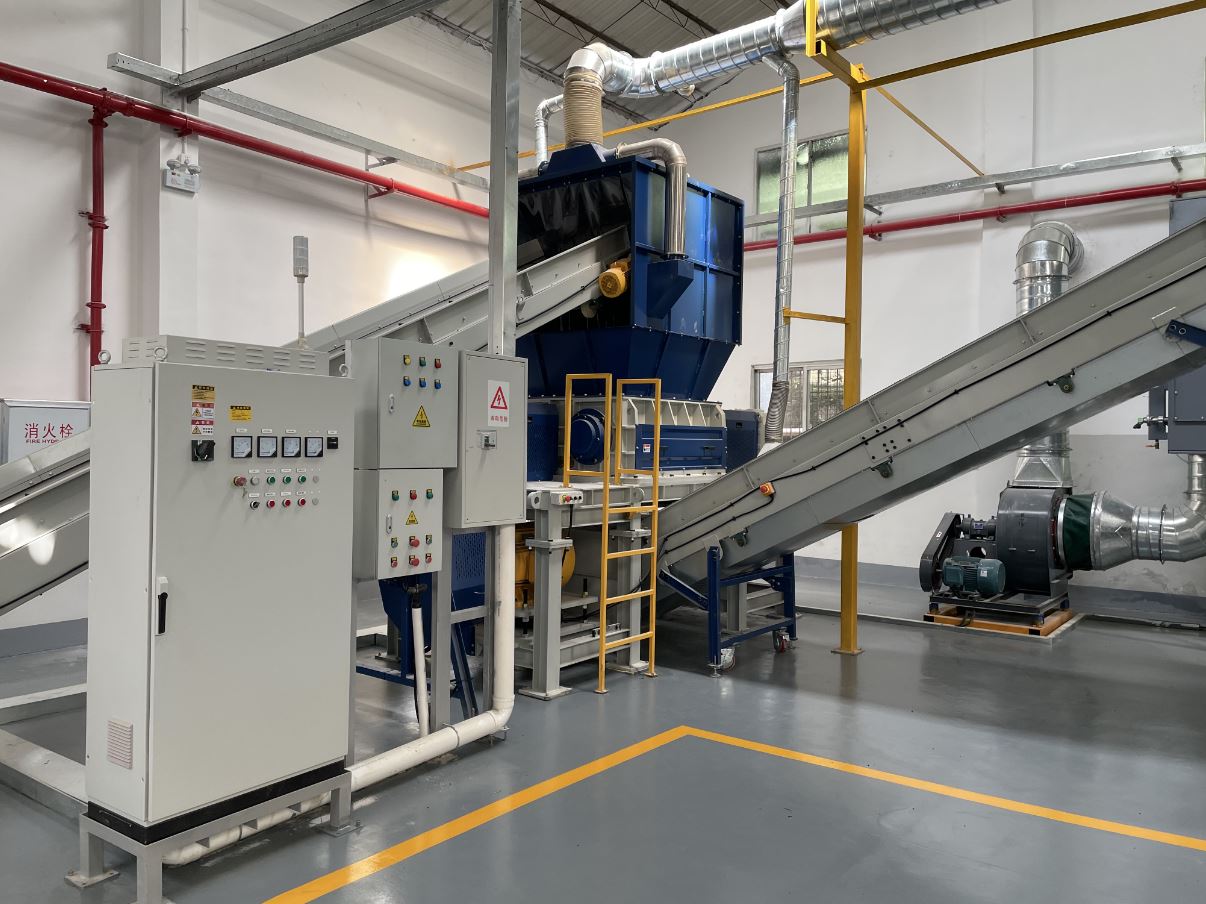
Industry has long been the source of pollution, yet within its machinery lies the potential for salvation. A new generation of factories is proving that production can coexist with purity. Modern filtration systems remove sulfur and carbon particles before they ever reach the air. Catalytic converters transform harmful emissions into benign gases. More advanced still, carbon capture facilities turn waste into wealth, binding CO2 into stable minerals or synthetic fuels. These technologies redefine waste as a resource rather than an endpoint. Manufacturing plants are being redesigned to function like ecosystems, where byproducts from one process feed another in endless circulation. In Japan, companies transform industrial heat into electricity through thermoelectric recovery units, while in Germany, circular steel production reduces raw material demand by recycling scrap in high-efficiency furnaces. Artificial intelligence now manages resource flow, predicting waste patterns and optimizing reuse. The old model of take, make, and discard is fading, replaced by loops of perpetual renewal. Pollution is no longer a side effect of productivity but a metric of inefficiency to be engineered out of existence. The result is a new industrial identity: cleaner, smarter, and aligned with the planet’s rhythm.
Technology Rooted in the Soil
The ground beneath our cities and farmlands carries the memory of every chemical spill and every careless disposal. Yet within that soil also lies its own medicine. Scientists have harnessed phytoremediation, a process that uses plants like sunflowers, willow, and Indian mustard to draw toxins from the earth. Their roots absorb metals such as lead and cadmium, cleansing land that would otherwise remain barren. Paired with mycoremediation, which uses fungi to break down petroleum residues, these methods create living networks of repair. Researchers have also developed nanomaterials that can isolate contaminants and trap them for safe removal, reducing the need for large-scale excavation. In agricultural regions, drones survey nutrient depletion and guide precision composting that restores fertility while preventing runoff. The future of pollution reduction beneath the surface depends on partnership with biology. The soil’s resilience is profound; it only needs time and the right companions to recover. With each seed planted for restoration, a lesson is learned about humility. The Earth does not require domination but assistance, and the technologies now emerging act as gentle hands rather than heavy tools, nurturing the quiet chemistry of rebirth.
The Power of Airborne Innovation
While some technologies heal the ground, others patrol the sky. Airborne innovation has become the new frontier of pollution control, turning invisible threats into visible data. Drones equipped with hyperspectral sensors map particulate matter across entire cities, revealing pollution’s movement with breathtaking clarity. These images feed into artificial intelligence systems that predict contamination hotspots, allowing targeted action before air quality declines. Stratospheric satellites monitor methane leaks and industrial emissions, creating transparency across borders and industries. Scientists are experimenting with atmospheric filters that ionize pollutants at large scale, functioning like planetary lungs. Urban planners have begun integrating purification drones with traffic systems, sending small fleets to congested intersections during peak hours. Even buildings themselves are evolving into active purifiers, using exterior coatings that react with sunlight to neutralize harmful compounds. The ambition is not simply to detect pollution but to create an atmosphere that continuously defends itself. Technology has become the sky’s immune system, restoring what decades of neglect have taken away. Each whirring rotor above represents both accountability and optimism, symbols of a world learning to care for the air as if it were part of its own anatomy.
Energy Transformed by Responsibility
Energy generation remains the heartbeat of modern civilization, but it has long been the artery of pollution as well. Now that equation is shifting. Renewable technologies such as offshore wind farms, desert solar plants, and geothermal grids are proving that clean power can scale globally. Yet the true transformation lies deeper in the details. Advanced electrolysis separates hydrogen from water using renewable electricity, providing fuel that emits nothing but vapor. Battery technologies are evolving toward solid-state designs that store energy longer and with fewer rare minerals. Waste-to-energy plants use controlled pyrolysis to generate electricity from organic refuse without harmful emissions. Even traditional power stations are being retrofitted with carbon capture systems that extract pollutants directly from exhaust streams. Artificial intelligence coordinates all of these resources within smart grids that balance demand in real time, preventing waste. Energy has entered its age of accountability, where efficiency is as celebrated as capacity. The light that powers homes and industries now carries less guilt and more gratitude. In this cleaner era, responsibility becomes the true currency of power, and every breakthrough illuminates the idea that prosperity need not come at the expense of purity.
Social Movements Fueling Technological Growth
Behind every technological advance stands the determination of people who refuse to accept decline as destiny. Environmental awareness has matured into collective action, turning citizens into co-creators of solutions. Grassroots movements fund local air sensors, giving residents the data to demand accountability from industries. Young innovators collaborate online to design low-cost water filters for developing nations. Educators weave sustainability into every discipline, ensuring that future engineers view pollution control not as an option but as a duty. Governments have learned that policies succeed only when supported by informed communities, and partnerships between universities, startups, and municipalities now drive rapid experimentation. Public art installations powered by pollution-absorbing materials remind people that creativity itself can clean the environment. Social media amplifies these successes, spreading both knowledge and motivation across continents. This collaboration between human will and technological progress is rewriting the definition of civic power. Each shared effort becomes proof that awareness, once awakened, does not fade. When people unite around the health of their planet, the momentum becomes unstoppable, and innovation finds its moral compass within collective hope.
The Future Built from Clear Horizons
The road toward a pollution-free world stretches across generations, yet its direction has never been clearer. Every purified river, every restored forest, every plume of smoke replaced by clean steam stands as evidence that change is both possible and necessary. Pollution reduction technologies represent more than machinery; they embody a moral evolution. As industries learn restraint and cities learn renewal, the atmosphere itself begins to recover its lost voice. The horizon, once dimmed by haze, now glows with possibility. The future will not depend solely on inventions but on the values that guide their use. GreenEconomy stands as part of that story, documenting the intersection between innovation and integrity. Humanity’s task is to ensure that progress remembers its purpose. Clean technology must not simply erase mistakes but prevent them from recurring. The goal is continuity, not conquest. When the air turns clear and the rivers run bright again, civilization will finally understand that its greatest achievement was not in reaching higher but in learning how to breathe with the planet it calls home. The horizon then becomes more than a view; it becomes a promise kept between humankind and Earth itself.